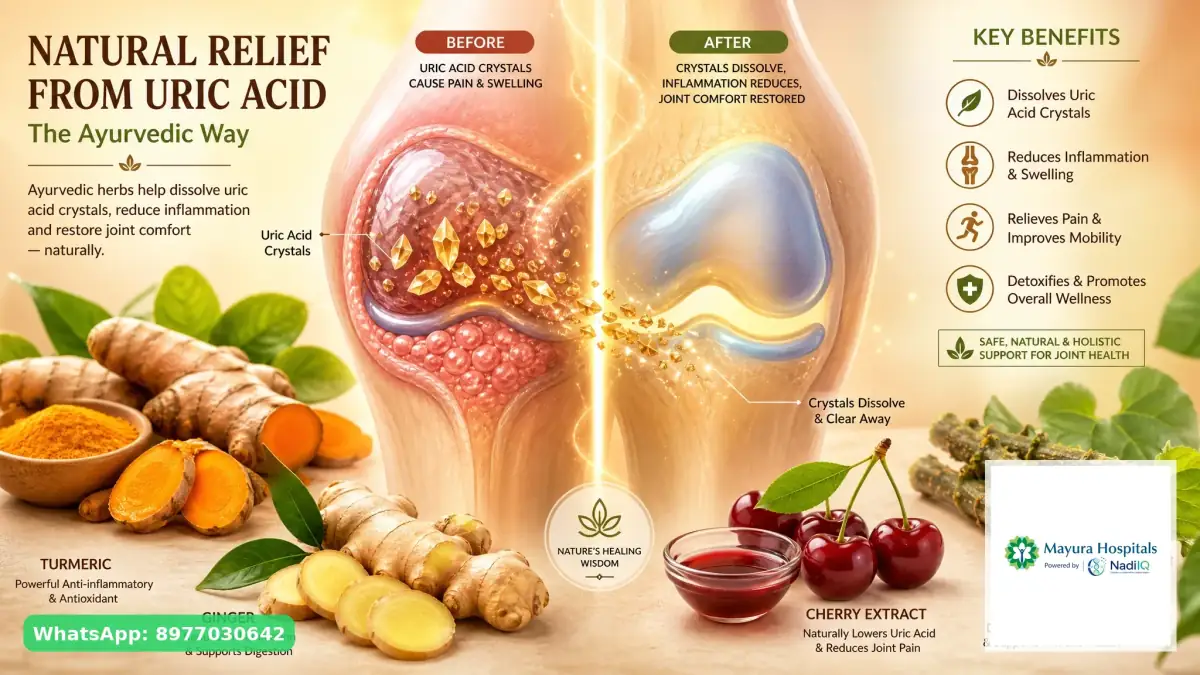
Gout attacks can be excruciating. Learn how dietary modifications and Ayurvedic therapies can reduce uric acid levels naturally and prevent painful flare-ups.
Gout — once called the "disease of kings" — is now increasingly common due to modern dietary habits. It occurs when uric acid crystals deposit in joints, causing intense, burning pain. But medications aren't the only answer.
Understanding Uric Acid
Uric acid is produced when your body breaks down purines — substances found naturally in your body and certain foods. When levels get too high (above 7 mg/dL in men, 6 mg/dL in women), crystals form in joints.
💡 Key Insight
The biggest dietary driver of high uric acid is not red meat — it's fructose. High-fructose corn syrup and excessive fruit juice consumption significantly elevate uric acid levels.
🎬 Watch: Gout | Mayura Ayurveda and Siddha Hospital
Dietary Management
Foods to Avoid
- Organ meats, shellfish, and red meat
- Sugary beverages and high-fructose corn syrup
- Alcohol, especially beer (contains both purines and fructose)
- Processed foods and refined carbohydrates
Foods That Help
- Cherries — clinically proven to reduce gout attacks by 35%
- Vitamin C-rich foods — reduce uric acid levels
- Low-fat dairy — the uricosuric effect of dairy helps excrete uric acid
- Adequate water — 3+ liters daily helps kidneys flush uric acid
Ayurvedic Approach
- Guduchi (Giloy) — powerful anti-inflammatory and uric acid reducer
- Punarnava — supports kidney function for better uric acid excretion
- Kaishore Guggulu — classical formulation for gouty arthritis
- Panchakarma — Virechana and Basti to eliminate metabolic toxins
Ready to Start Your Healing Journey?
Our experts at Mayura Hospitals combine modern diagnostics with traditional Ayurvedic therapies for gout and uric acid management. Book your consultation today.
Book Appointment — ₹500Key Takeaways
- Evidence-based insights from our medical experts
- Practical steps you can apply to your health journey
- Part of our commitment to metabolic health education
Written by
Dr. Mayura
Healthcare professional at Mayura Hospitals, specializing in metabolic health and the 3F Protocol.