
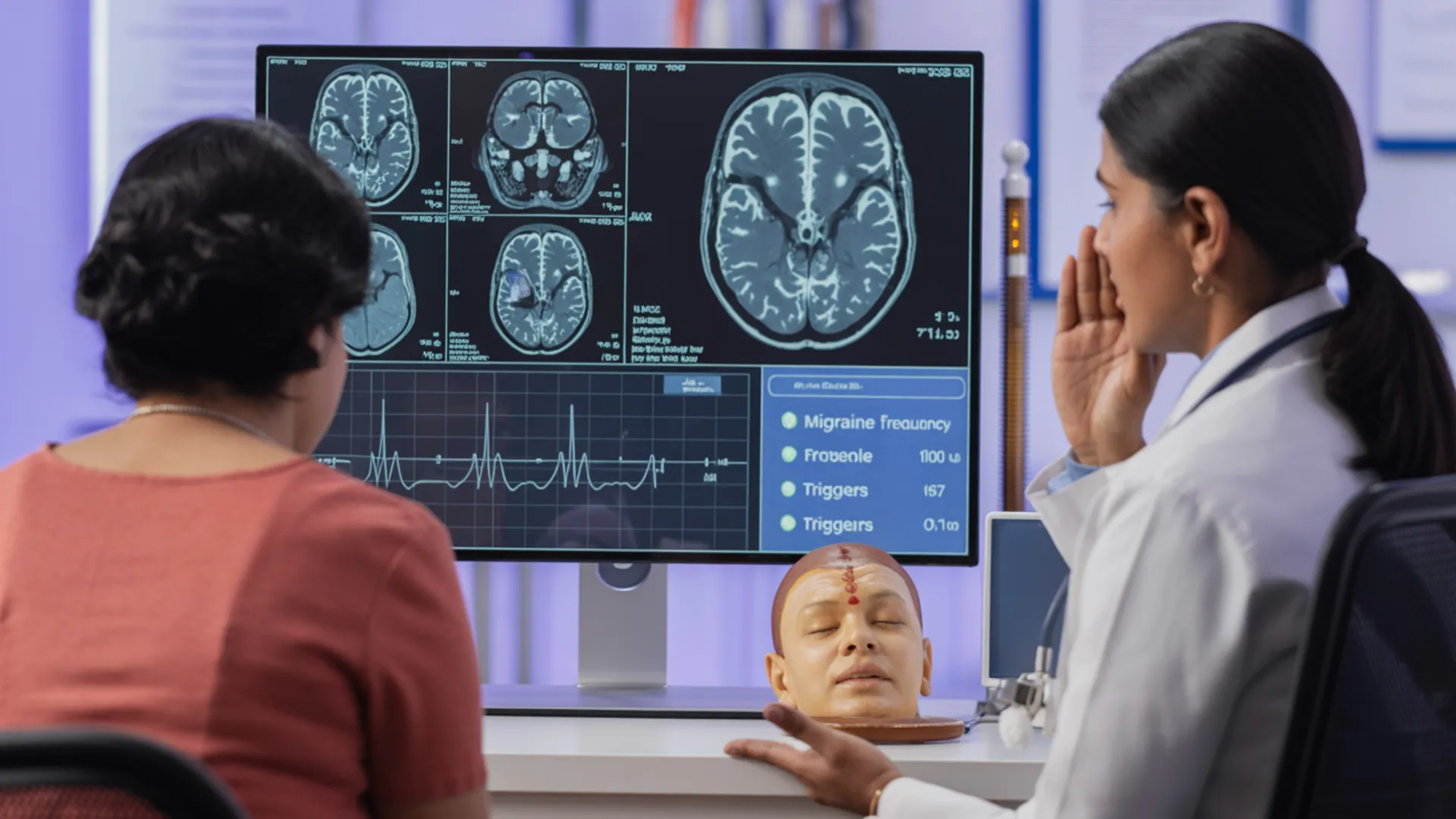
The Headache Never Really Goes Away.
Painkillers Are Not the Answer.
Because the problem is not in your head. It is in your nervous system.
Throbbing pain that blinds you for hours, nausea, light sensitivity, that aura before the storm — these are not just "headaches." They are signs of nervous system hyperexcitability, hormonal dysregulation, and chronic neuroinflammation. Your painkiller silences the alarm — it never fixes the wiring.
This Is What Living With Migraine Actually Feels Like
The pain hits without warning. Throbbing, pulsating, one-sided. You shut the curtains, lie in a dark room, and pray it passes.
Light hurts. Sound hurts. Even the smell of food triggers nausea. You cancel plans, miss work, and wait for hours — sometimes days.
You see the aura and know what is coming. Zigzag lines, blind spots, tingling. Dread fills you before the pain even starts.
You have tried every painkiller — ibuprofen, sumatriptan, migraine cocktails. Each one works less than the last.
Your attacks are getting more frequent. Monthly became weekly. Your neurologist keeps adding preventive medications.
Nobody has checked your magnesium, hormones, food triggers, or sleep quality. Just pill after pill after pill.
If even two of these are true for you, your migraine is not random. It has identifiable triggers that nobody is looking for.

"I had migraines 15 days a month. Nobody checked my magnesium or hormones. At Mayura, they found 3 triggers in one visit."
— What 60% of our migraine patients told us at their first visit
What Most Neurologists Are Not Testing
Your neurologist prescribes preventives based on attack frequency. These tests reveal why your brain keeps triggering migraines:
Magnesium (RBC Magnesium)
Magnesium deficiency is found in up to 50% of migraine patients. Standard serum magnesium misses intracellular depletion. RBC magnesium is the accurate test — and most neurologists never order it.
Hormonal Panel (Estrogen/Progesterone)
Estrogen fluctuations are the primary driver of menstrual migraines. Women on OCP or approaching perimenopause often see dramatic changes when hormonal balance is restored.
Vitamin D, B2 & CoQ10 Levels
These three nutrients are clinically proven migraine preventives. Deficiency in any one increases migraine frequency and severity. Standard neurology workups rarely check them.
Histamine & Food Sensitivity
Histamine intolerance and hidden food triggers (aged cheese, wine, processed meats, chocolate) drive migraines through mast cell activation. An elimination diet guided by testing can halve your attacks.
Sleep Architecture Assessment
Disrupted sleep patterns, sleep apnea, and poor sleep quality are major migraine triggers. A sleep assessment reveals if your brain is recovering adequately between attacks.
Gut-Brain Axis & Inflammation
Gut permeability allows inflammatory molecules to cross the blood-brain barrier, lowering the migraine threshold. hs-CRP and gut health assessment reveal this hidden connection.
Migraine Does Not Stay Still. It Deepens.
Left untreated at the root, migraines progress from occasional episodes to chronic daily headaches.
Episodic Migraine
Attacks 1-4 times a month. Each lasts 4-12 hours. Painkillers still work. You can predict some triggers. You dismiss it as "just a bad headache."
Can normalize in 6-8 weeks
Frequent Migraine
Attacks 5-10 times a month. Duration increasing. Painkillers working less. New triggers appearing. Work and social life affected. You live in fear of the next attack.
Can reverse in 8-12 weeks
High-Frequency Migraine
Attacks 10-15 days a month. Approaching "chronic" threshold. Medication overuse developing. Constant low-grade headache between attacks. Quality of life severely impaired.
Can significantly reduce
Chronic Daily Headache
Headache 15+ days a month. Pain never fully goes away. Multiple medications with diminishing returns. Disability-level impact. What started as occasional became constant.
Requires deep intervention

Your Kitchen Can Do What Painkillers Cannot
Your brain needs magnesium, riboflavin, omega-3, and CoQ10 — not just triptans. When you eliminate food triggers and replenish neuroprotective nutrients, the migraine threshold rises naturally. We build YOUR brain-food map based on YOUR trigger and deficiency profile.
- Magnesium-rich foods: pumpkin seeds, spinach, dark chocolate, almonds for nerve calming
- Omega-3 from walnuts, flaxseeds, fish — reducing neuroinflammation naturally
- Ginger tea and turmeric — natural anti-inflammatory and anti-nausea during attacks
- Riboflavin-rich foods: eggs, mushrooms, green leafy vegetables for mitochondrial support
The 3F Migraine Freedom Protocol
Not painkillers. Not preventives. A neurological reset that fixes WHY your brain keeps triggering migraines — from inside out.
Food Optimization
Neuroprotective nutrition, not trigger avoidance
- Migraine trigger food identification and elimination
- Magnesium, B2, CoQ10 repletion through Indian meals
- Histamine-lowering dietary protocol
- Gut-brain axis repair through anti-inflammatory foods
Fasting Protocol
Metabolic reset for brain healing
- Timed eating for stable blood sugar (hypoglycemia triggers migraines)
- Ketone body production — neuroprotective during fasting
- Reduced inflammatory cytokines reaching the brain
- Doctor-supervised for patients with frequent attacks
Fitness Integration
Movement that calms your nervous system
- Yoga and pranayama for parasympathetic activation
- Regular aerobic exercise — proven to reduce migraine frequency
- Sleep hygiene optimization for brain recovery
- Wearable-tracked stress, sleep, and migraine correlation
Your Neurologist vs. Mayura
This is not criticism. Most neurologists treat migraine as a brain problem. We treat it as a whole-body signal.
What Happens at Most Clinics
- ✕Painkiller for acute attacks. If too frequent, add a preventive medication.
- ✕Preventives: beta-blockers, anticonvulsants, antidepressants — each with its own side effects.
- ✕"Keep a headache diary" and "avoid triggers" — the only lifestyle advice.
- ✕MRI to rule out structural causes. No nutrient, hormonal, or gut investigation.
- ✕"Migraine is genetic, you will have it for life" — no root-cause hope offered.
What Happens at Mayura
- RBC magnesium, hormones, vitamin D, B2, CoQ10, histamine, gut health tested on day one.
- Fix magnesium deficiency → migraine threshold rises without preventive drugs.
- Nasya + Shirodhara Ayurvedic protocol for nervous system calming and head region therapy.
- Food trigger elimination + hormonal balancing + sleep optimization.
- Goal: fewer migraines, then no migraines — not lifelong medication management.
Your First 12 Weeks at Mayura
Not a generic headache plan. This is what actually happens — tracked with attack frequency, severity scores, and lab markers.
Internal Migraine Mapping
RBC magnesium, hormonal panel, vitamin D, B2, CoQ10, histamine, hs-CRP, gut permeability, sleep assessment. Migraine diary baseline. Your internal triggers are identified.
Your Protocol Begins
Magnesium glycinate supplementation started. Food trigger elimination initiated. Nasya + Shirodhara therapy begun. Sleep hygiene protocol. Hormonal correction if applicable.
First Shift
Attack frequency beginning to drop. Severity of attacks reducing. Aura episodes less intense. Sleep quality improving. Many patients notice the first migraine-free week.
Freedom Emerging
Migraine frequency significantly reduced. Painkiller usage dropping dramatically. Energy levels improving. Many patients report "I forgot I used to have migraines."
Brain Health Checkpoint
Full lab recheck. Magnesium, hormones, nutrients compared to baseline. Migraine diary analysis. Most patients see 70-80% reduction in frequency. Medication tapering finalized.
Sustained Brain Health
Quarterly monitoring ensures nutrient levels and hormonal balance hold. Seasonal trigger preparation. Your brain health is now a lifestyle, not a medication schedule.
Start Healing Your Brain Today. For Free.
Register on our patient portal and get instant access to tools that help you understand your migraines — before your next neurologist visit.
AI Brain-Healthy Diet
Neuroprotective Indian meals for YOUR trigger profile
Migraine Relief Plan
Yoga and exercise routines that prevent attacks
AI Health Assistant
Ask any migraine question. Track your attacks.
Trigger Assessment
Quick check: what is driving your migraines?
Magnesium & Nutrient Quiz
Are deficiencies lowering your migraine threshold?
Daily Brain Plan
What to eat, how to sleep, what to avoid. Every day.
For every registered patient
You Should Consult at Mayura If...
Migraines more than 4 times a month that disrupt your work and daily life
Painkillers are working less than they used to — or you are taking them more than 10 days a month
Migraines that coincide with your menstrual cycle (menstrual migraines)
You get visual aura, tingling, or other neurological symptoms before the headache
Your neurologist has added preventive medications but migraines keep increasing
You also have digestive issues, poor sleep, or high stress alongside migraines
Nobody has checked your magnesium, hormones, or vitamin levels despite chronic migraines
Family history of migraines and you want to reduce frequency before it becomes chronic
Frequently Asked Questions
Explore Related Conditions & Programs
Many health conditions share root causes. See what else Mayura Hospitals can help you with.
Related Conditions
Conditions that share similar root causes
Recommended Programs
Curated care plans for your journey
Take the First Step Towards Better Health
Do not wait for migraine to progress further. Early assessment can help identify the root cause and guide you to a better path.
తలనొప్పి ఆగదు అంటే painkiller కాదు సమాధానం — root-cause తో migraine-free జీవితం సాధ్యమే.
Medical Disclaimer: The information provided on this page is for educational purposes only and is not intended as medical advice. Individual results may vary. Treatment outcomes depend on the patient's condition, severity, duration, and response to care. All treatment plans are developed after a thorough doctor evaluation. Medication adjustments are made only under medical supervision. Mayura Hospitals does not guarantee specific results or claim to cure any disease. Please consult our doctors for personalized assessment and care.