You Were Told This Weakness Is
Permanent. It Often Is Not.
Because after a stroke or paralysis, the brain can form new pathways — if recovery starts early and intensively.
Weakness on one side, difficulty walking, speaking, or gripping — these are not always a fixed sentence. The brain’s ability to rewire (neuroplasticity) means structured, intensive rehabilitation can restore real function. “Learn to live with it” too often replaces a proper recovery plan.
This Is What Recovery After Paralysis Actually Feels Like — For You and Your Family
One side of the body feels weak or heavy — the arm, the leg, or the face does not respond as before.
Walking, gripping, dressing, or speaking that were once automatic now take enormous effort.
You were told active rehabilitation should stop after a few weeks — and progress seemed to stall.
The family is exhausted and unsure how to help recovery continue safely at home.
Nobody clearly explained the blood pressure, sugar, or cholesterol that caused the stroke.
You fear another stroke — but no one built a plan to actually prevent the next one.
If even two of these are true, recovery has been left unfinished — and both function and protection can still be improved.
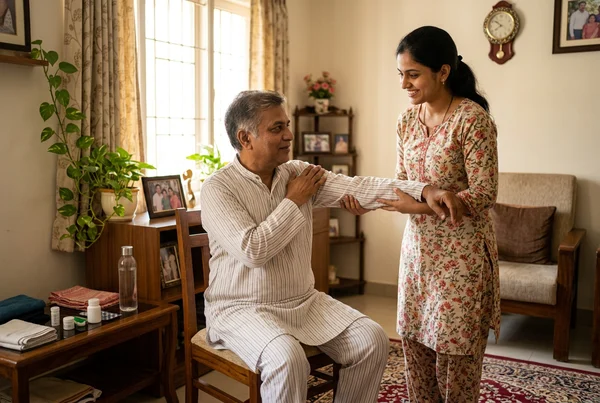
"We were told recovery had stopped. Nobody guided us to keep going or to control his BP. We wish someone had given us a real plan."
— What most families told us at their first visit
What Most Recovery Plans Are Missing
Standard care stabilises the emergency and offers limited rehab. These deeper areas decide how much function you truly regain — and whether it happens again:
Neuroplasticity-Focused Rehab
The brain can rewire itself with the right intensity and repetition. Most patients never get a structured, progressive neuro-rehab plan that harnesses this.
Stroke-Driver Control
Uncontrolled BP, sugar, cholesterol, and atrial fibrillation are the real reasons the stroke happened. If they are not controlled, the risk of another one stays high.
Intensive, Sustained Physiotherapy
Recovery does not end at a few weeks. Consistent, escalating physiotherapy and occupational therapy keep restoring movement for months.
Nutrition for Brain Repair
Protein, omega-3s, B12, and antioxidants support nerve and brain recovery. Nutrition is rarely built into a rehab plan.
Speech & Swallow Support
Speech, swallowing, and fine motor skills need targeted therapy. These are often neglected once the patient leaves hospital.
Spasticity & Circulation Care
Muscle stiffness (spasticity), poor circulation, and secondary complications slow recovery when left unmanaged. Ayurvedic and physical therapies help here.
Recovery Follows a Path. Early, Intensive Effort Wins.
The most function is regained when structured rehabilitation and driver control begin early — but meaningful gains are still possible later with the right plan.
Acute & Early Phase
The first weeks after the event. Early, guided rehabilitation and driver control set the foundation. This is when the fastest gains are possible.
Best window to intervene
Active Recovery
Intensive physiotherapy, occupational and speech therapy drive steady return of movement and skills. Neuroplasticity is highly active.
Major gains possible
Plateau Risk
If active rehab stops, progress stalls and stiffness sets in. With continued structured effort, recovery keeps advancing.
Can keep improving
Long-Term Adaptation
Function, independence, and confidence keep building with maintenance rehab — while controlled drivers protect against another stroke.
Sustained progress
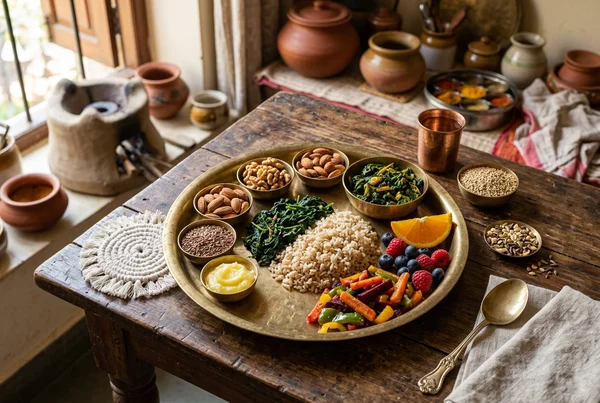
Your Kitchen Fuels the Brain’s Repair
Nerve and brain recovery need the right building blocks — and food that keeps blood pressure, sugar, and cholesterol in check protects against another stroke. We build a recovery-focused, heart-safe food map tailored to YOUR markers.
- Protein-rich Indian meals to rebuild muscle and support nerves
- Omega-3 foods (walnuts, flaxseed, fish) for brain repair
- Low-salt, heart-safe cooking to control blood pressure
- Antioxidant vegetables and B12 for nerve and brain health
The 3F Recovery Protocol
Not just “learn to cope.” A structured recovery reset that rebuilds function while controlling the drivers behind the stroke — from inside out.
Food Optimization
Recovery-fuelling, heart-safe nutrition
- Protein-rich Indian meals for muscle and nerves
- Omega-3 and antioxidant foods for brain repair
- Low-salt cooking to control blood pressure
- B12 and deficiency correction for nerve health
Fasting & Metabolic Care
Control the drivers behind the stroke
- Blood sugar and cholesterol control
- Gentle, personalised metabolic support
- Weight and inflammation management
- Doctor-supervised and stroke-safe
Fitness & Neuro-Rehab
Movement that rewires the brain
- Intensive physiotherapy and occupational therapy
- Neuroplasticity-based repetition and practice
- Speech, swallow, and fine-motor training
- Wearable-tracked progress and daily home practice
Standard Paralysis Care vs. Mayura
This is not criticism. Most care stabilises the emergency and offers brief rehab. We rebuild function and protect against the next event.
What Happens at Most Clinics
- ✕Emergency stabilised, then a few weeks of basic rehab.
- ✕“The recovery window has closed” — active effort stops.
- ✕No structured neuroplasticity-based program.
- ✕Little control of the BP, sugar, and cholesterol that caused it.
- ✕Family left without a plan; progress stalls at home.
What Happens at Mayura
- Full recovery and stroke-driver assessment on day one.
- Intensive, escalating physiotherapy and neuro-rehabilitation.
- BP, sugar, cholesterol, and inflammation controlled together.
- Work alongside your existing medication — never stop it abruptly.
- Goal: regain function AND prevent the next stroke.
Your First 16 Weeks at Mayura
Not a generic plan. This is what actually happens — tracked with function scores, therapy milestones, and health markers.
Recovery & Risk Mapping
Full functional assessment, BP, sugar, cholesterol, and inflammation review, deficiency screen, and a personalised rehabilitation baseline. The drivers behind the stroke are identified.
Your Protocol Begins
Intensive physiotherapy, occupational and speech therapy started. Recovery-focused nutrition. Ayurvedic neuro-support. Stroke drivers actively controlled. Existing medication continued safely.
First Functional Gains
Many patients notice improved movement, grip, or speech and steadier balance. Home practice routine established for the family.
Visible Improvement
Walking, daily activities, and independence often improve meaningfully. BP and metabolic markers moving into safe ranges.
Full Recheck
Function scores compared to baseline. Health markers reassessed. Rehabilitation intensified and refined for continued recovery.
Sustained Recovery & Protection
Maintenance rehab keeps function improving. Controlled drivers protect against another stroke. Long-term independence is the goal.
Start Your Recovery Today. For Free.
Register on our patient portal and get instant access to tools that help you and your family support recovery safely — before your next visit.
AI Recovery Diet
Brain-repair, heart-safe Indian meals for YOU
Home Rehab Exercises
Guided physiotherapy routines to do safely at home
AI Health Assistant
Ask any recovery-care question. Track progress.
Function & BP Tracker
Log movement, speech, and blood pressure over time
Stroke-Risk Quiz
Check the drivers behind the stroke
Daily Recovery Plan
What to eat, how to exercise, what to monitor. Daily.
For every registered patient
You Should Consult at Mayura If...
A loved one has weakness or paralysis after a stroke and recovery has stalled
You were told the “recovery window” has closed and active rehab was stopped
There is difficulty with walking, gripping, speaking, or swallowing
The blood pressure, sugar, or cholesterol behind the stroke are not well controlled
The family needs a clear, safe plan to continue rehabilitation at home
You want intensive, structured physiotherapy combined with Ayurvedic support
You want to regain independence AND prevent another stroke
There is muscle stiffness, spasticity, or poor circulation slowing progress
Frequently Asked Questions
Explore Related Conditions & Programs
Many health conditions share root causes. See what else Mayura Hospitals can help you with.
Related Conditions
Conditions that share similar root causes
Recommended Programs
Curated care plans for your journey
Take the First Step Towards Better Health
Do not wait for stroke recovery and nerve rehabilitation to progress further. Early assessment can help identify the root cause and guide you to a better path.
Paralysis తర్వాత recovery ఆగిపోదు — సరైన rehabilitation తో function తిరిగి రావచ్చు, మర్లి stroke రాకుండా కాపాడవచ్చు.
Medical Disclaimer: The information provided on this page is for educational purposes only and is not intended as medical advice. Individual results may vary. Treatment outcomes depend on the patient's condition, severity, duration, and response to care. All treatment plans are developed after a thorough doctor evaluation. Medication adjustments are made only under medical supervision. Mayura Hospitals does not guarantee specific results or claim to cure any disease. Please consult our doctors for personalized assessment and care.