Your Legs Feel Heavy by 3 PM.
Every Single Day.
That is not tiredness. That is blood pooling.
Swollen ankles by evening. Visible veins crawling up your calves. Aching legs after standing. This is venous insufficiency — your leg veins are failing to push blood back up. And compression stockings are not a solution. They are a crutch.
This Is What Living With Varicose Veins Actually Feels Like
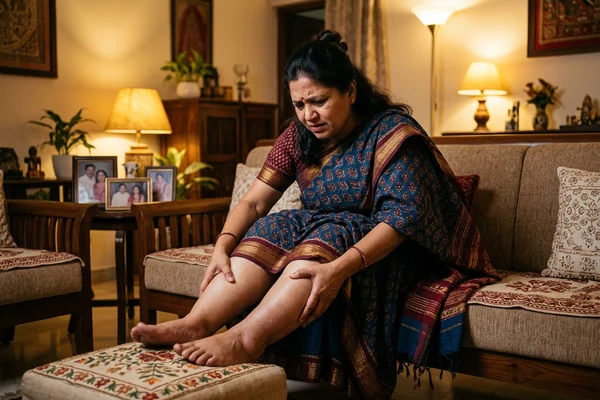
Morning is fine. You get up, you move, everything feels normal. Then by 2 PM, the heaviness starts. Your calves feel like they are filled with sand.
Your ankles puff up — you can see the sock marks. Standing at work becomes a negotiation. You shift weight from one leg to the other.
The veins on your calves look more prominent than they did last month. Some are bulging, twisted, visible under the skin.
Night cramps wake you up. A sudden, vicious tightening in your calf that makes you gasp. You walk it off. It happens again.
You avoid shorts, skirts, anything that shows your legs. The veins are getting worse. Nobody has checked why.
Your doctor said compression stockings and leg elevation. That is it. No metabolic check. No inflammation markers.
This is not aging. This is progressive venous insufficiency — and every day without treatment, the damage accumulates.
"My surgeon said operate. Mayura said fix weight, inflammation, and calf pump first. 8 weeks later — no surgery needed."
— What many of our varicose vein patients experience
What Most Vascular Surgeons Are Not Checking
Surgery removes a vein. These assessments reveal why your veins are failing in the first place:
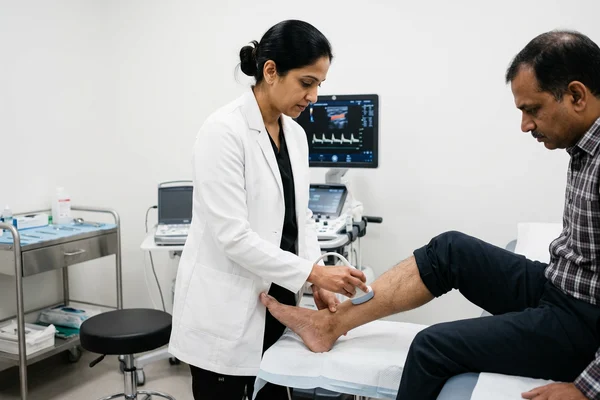
Venous Doppler Ultrasound
Not just "visible veins" — Doppler mapping reveals which valves have failed, which veins have reflux, and how severe the insufficiency is. Most GPs diagnose by looking, not by measuring.
Inflammatory Markers
Chronic venous disease is an inflammatory condition. hs-CRP, D-dimer, and clotting studies reveal the systemic inflammation driving vein wall weakening.
Metabolic Assessment
Insulin resistance, obesity, and hormonal imbalances increase venous pressure and weaken vein walls. These root causes are never checked in a vascular surgery consultation.
Coagulation Profile
Some patients have subclinical clotting tendencies (thrombophilia) that accelerate venous damage. A clotting screen can prevent DVT complications.
Lymphatic Function
Venous insufficiency often coexists with lymphatic sluggishness. Combined venolymphatic dysfunction causes worse swelling than either alone.
Gait & Biomechanical Analysis
Flat feet, poor calf muscle pump function, and prolonged static postures contribute to venous stasis. Nobody checks how you walk or stand.
Varicose Veins Do Not Stay Cosmetic. They Become Medical.
Left untreated, venous insufficiency progresses from spider veins to skin damage and ulcers.
Spider Veins
Small purple/red veins visible on thighs or calves. Mild heaviness in evenings. Easily dismissed as cosmetic.
Can normalize in 4-6 weeks
Varicose Veins
Bulging, twisted veins visible under skin. Aching, throbbing, heaviness especially after standing. Ankle swelling by evening.
Can reverse in 6-8 weeks
Skin Changes
Skin around ankles darkens (hyperpigmentation). Eczema-like itching. Skin becomes thin, shiny, and fragile. Lipodermatosclerosis hardens the tissue.
Can slow and manage
Venous Ulcers
Open wounds on ankles that refuse to heal. Chronic pain, infection risk, and disability. What started as a cosmetic concern is now a serious medical condition.
Requires deep intervention

Your Kitchen Can Strengthen Your Veins
Your vein walls are made of collagen, elastin, and smooth muscle. Specific nutrients strengthen them. Inflammation weakens them. Your diet can tip the balance either way.
- Beetroot juice for nitric oxide and improved blood flow
- Amla and pomegranate for vitamin C and collagen support
- Horse gram (kulthi dal) for flavonoids and vein wall strength
- Dark grapes for resveratrol and vein wall integrity
The 3F Vascular Health Protocol
Not surgery first. A root-cause approach that fixes WHY your veins are failing — circulation from inside out.
Food Optimization
Vein-strengthening nutrition, not generic advice
- Flavonoid-rich Indian foods for vein wall support
- Anti-inflammatory meals to reduce venous pressure
- Vitamin C and rutin for collagen and elastin repair
- Weight management meals to reduce abdominal pressure
Fasting Protocol
Metabolic reset for inflammation control
- 16:8 intermittent fasting for inflammation reduction
- Autophagy activation — cellular renewal for vein repair
- Weight optimization reducing venous pressure
- Doctor-supervised for patients on blood thinners
Fitness Integration
Movement that pumps blood back up
- Calf raises and pump exercises for venous return
- Brisk walking 30 min/day for circulation
- Yoga inversions for passive venous drainage
- Workplace micro-exercises for prolonged standers
Your Vascular Surgeon vs. Mayura
The difference between removing a vein and fixing why your veins are failing.
What Happens at Most Clinics
- ✕Visual diagnosis — "yes, those are varicose veins." No Doppler mapping.
- ✕Compression stockings and "elevate your legs." That is the entire plan.
- ✕Surgery when veins are large enough — no root-cause investigation.
- ✕No metabolic assessment — insulin, weight, hormones unchecked.
- ✕"It is genetic, nothing you can do" — no lifestyle intervention.
What Happens at Mayura
- Venous Doppler mapping + metabolic + inflammatory assessment on day one.
- Root-cause correction: weight, inflammation, calf pump, vein wall support.
- Conservative management first — surgery only when medically necessary.
- Insulin, BMI, hormonal factors that drive venous pressure — all checked.
- Genetics loads the gun, lifestyle pulls the trigger — we fix the trigger.
Your First 12 Weeks at Mayura
A structured path from heavy, aching legs to comfortable circulation — tracked with Doppler scans and symptom scores.
Vascular Mapping
Complete venous Doppler, metabolic assessment, inflammatory markers, and coagulation studies. We understand your circulation completely.
Root-Cause Profile
Your personalized vascular health map: which veins are affected, what is driving the damage, and which approach will work best for you.
Circulation Correction
Medical compression, anti-inflammatory protocol, venotonic supplements, Ayurvedic vascular herbs. Calf pump exercises begin.
Symptom Relief
Leg heaviness reduces. Evening swelling decreases. Aching diminishes. You can stand and walk longer without discomfort.
Vein Stabilization
Inflammatory markers improve. Venous reflux reduces on Doppler. Skin changes begin reversing. Spider veins may fade.
Long-Term Vein Health
Quarterly monitoring, exercise maintenance, compression strategy, and weight management keep your circulation healthy.
Start Healing Your Veins Today. For Free.
Register on our patient portal and get instant access to tools that help you understand your vein health — before your next vascular visit.
Vein Health Risk Calculator
Assess risk by occupation, family history, weight
Vascular Health Meal Planner
Indian meals for flavonoids and anti-inflammation
AI Health Assistant
Ask any vein health question. Get instant answers.
Leg Exercise Guide
Calf pump exercises you can do at your desk
Symptom Severity Tracker
Track heaviness, swelling, and pain patterns
Compression Guide
How to choose and wear medical-grade stockings
For every registered patient
You Should Consult at Mayura If...
Visible veins on your calves or thighs that are getting worse over time
Legs feel heavy, achy, or swollen by evening — especially after standing
Your job requires prolonged standing (teachers, nurses, shop workers, cooks)
Varicose veins appeared during pregnancy and never went away
Skin around your ankles is darkening or becoming itchy and dry
Leg cramps at night wake you up and disrupt your sleep
A surgeon recommended surgery but you want to explore conservative options first
Family history of varicose veins and you want to prevent progression
Frequently Asked Questions
Explore Related Conditions & Programs
Many health conditions share root causes. See what else Mayura Hospitals can help you with.
Related Conditions
Conditions that share similar root causes
Recommended Programs
Curated care plans for your journey
Take the First Step Towards Better Health
Do not wait for Varicose Veins to progress further. Early assessment can help identify the root cause and guide you to a better path.
కాళ్ళలో నొప్పి, వాపు, బరువు — ఇవి cosmetic కాదు. Root-cause తో ఉపశమనం పొందండి.
Medical Disclaimer: The information provided on this page is for educational purposes only and is not intended as medical advice. Individual results may vary. Treatment outcomes depend on the patient's condition, severity, duration, and response to care. All treatment plans are developed after a thorough doctor evaluation. Medication adjustments are made only under medical supervision. Mayura Hospitals does not guarantee specific results or claim to cure any disease. Please consult our doctors for personalized assessment and care.