Fatty liver affects roughly one in three Indian adults, and grade 1 changes are genuinely reversible. Here is how Siddha medicine for fatty liver approaches the root cause, what the evidence honestly supports, and a 12-week plan for working professionals.
Your annual health check came back with one line nobody explained: grade 1 fatty liver. Your cholesterol is mildly up, your waist has grown two inches in three years, and the advice you got was three words long — "just lose weight".
That advice is not wrong. It is just incomplete. Fatty liver is now the most common liver condition in India, and in its early stages it is genuinely reversible. But the window closes quietly, and the people most likely to be standing in it are the ones with the least time to notice: working professionals in their thirties, forties and fifties, sitting nine hours a day and eating whatever the day allows.
Here is what fatty liver actually is, why it clusters in midlife desk workers, and what a Siddha medicine approach to fatty liver looks like — including what the evidence honestly supports, and what it does not.
Quick answer: Fatty liver is reversed by removing what causes it — insulin resistance and excess refined carbohydrate — rather than by "flushing" the liver. The best-evidenced steps are 5–10% weight loss, cutting liquid sugar and refined flour, 150 minutes of weekly activity, resistance training twice a week, and 7–8 hours of sleep. Siddha treatment for fatty liver adds supervised herbal and varmam therapy to that foundation. Grade 1 changes typically respond within 12 weeks; fibrosis takes longer.
What Is Fatty Liver Disease — and Why Is It So Common in India?
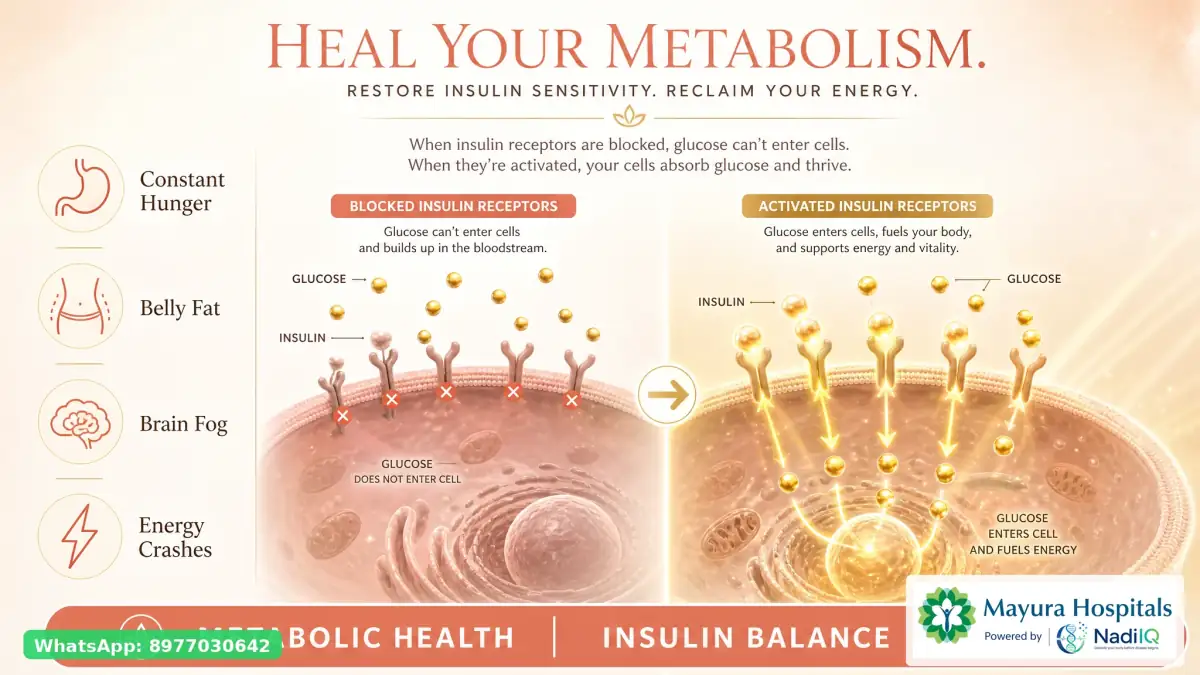
Fatty liver disease means fat has accumulated inside your liver cells. In its metabolic form — now called MASLD (metabolic dysfunction-associated steatotic liver disease), and previously known as NAFLD — it is driven not by alcohol but by insulin resistance, central fat, refined carbohydrate and inactivity.
The Indian numbers are stark. A systematic review and meta-analysis of Indian studies published in the Journal of Clinical and Experimental Hepatology estimated that 38.6% of Indian adults have NAFLD (Shalimar et al., J Clin Exp Hepatol, 2022) — roughly one in three — rising to 52.8% in high-risk groups such as people who are overweight or already living with diabetes. Among Indian children, pooled prevalence was 35.4%.
Two features make the Indian picture distinctive:
- It happens at a lower body weight. South Asians develop insulin resistance and liver fat at lower BMIs and smaller waist circumferences than Western populations. "Lean" fatty liver is common here, which is why the condition is so often missed in people who do not look overweight.
- It is a sugar problem, not a fat problem. The dominant driver is refined carbohydrate and fructose — white rice, maida, sugary drinks, packaged snacks — combined with prolonged sitting. Dietary fat is a much smaller part of the story than most people assume.
Why Fatty Liver Shows Up in Working Professionals in Their 40s
The desk-job metabolism
Seven to nine hours of sitting does something specific. Muscle glucose uptake falls, so the sugar you eat has fewer places to go. The liver compensates by converting excess sugar into fat through a process called de novo lipogenesis — fat made in the liver, from carbohydrate. Add late dinners, delivery food, weekend alcohol and five to six hours of sleep, and the liver is being asked to store fat every single day, with no recovery window.
The "normal report" trap
Liver enzymes — SGPT/ALT and SGOT/AST — can be completely normal in early fatty liver. An ultrasound is often the only thing that flags it, and even then it is frequently dismissed as "mild". So the report gets filed away, and the next one is twelve months later.
The silent-symptom problem
Early fatty liver usually produces no symptoms at all. When symptoms do appear, they are vague enough to be blamed on work: persistent afternoon fatigue, a dull heaviness or discomfort in the upper-right abdomen, bloating and sluggish digestion, disturbed sleep, and weight that will not move despite eating "normally".
Key insight: Fatty liver is not a liver disease that happens to affect your metabolism. It is a metabolic disease that happens to show up in your liver. That is why treating it as a liver problem — with "liver tonics" and detox juices — so reliably fails, and why the same plan that improves your blood sugar and waistline is the plan that clears liver fat.
How Siddha Medicine Understands Fatty Liver
Siddha medicine does not treat fatty liver as an isolated organ problem. It reads it as a metabolic disturbance that has settled in the liver.
In the Siddha framework the body is governed by the Mukkutram — vatham, pitham and kabam. The liver is the principal seat of pitham, the humour that governs digestion, metabolism and transformation. When food, sleep and activity are persistently wrong, the digestive fire weakens, food is incompletely metabolised, and Ama — sticky, undigested metabolic residue — begins to accumulate. Fat (medas) and Ama together obstruct the liver's channels, and the condition presents as a liver disorder rooted in deranged pitham with kabam accumulation.
That framing changes the treatment target. The aim is not to flush the liver. It is to restore digestion and metabolic handling so that the liver stops being asked to store fat in the first place.
What Siddha Treatment for Fatty Liver Actually Involves
1. Root-cause assessment, not just a liver report
A Siddha physician reads the nadi (pulse) and assesses mukkutram balance, digestion, appetite, bowel pattern, sleep and energy across the day — alongside your actual bloodwork: fasting glucose, HbA1c, lipid profile, SGPT/ALT, SGOT/AST, GGT, TSH and vitamin D, plus the ultrasound grade or FibroScan value if you have one. The point is to see how far the metabolic derangement has gone, not merely that fat is present.
2. Pathiyam — correcting the food that created the problem
- Cut liquid sugar and refined flour first. Sugary drinks, fruit juice, packaged snacks, white bread and maida-based foods have the fastest impact on liver fat.
- Shift the grain base. Millets (ragi, jowar, bajra), hand-pounded or brown rice, and whole legumes in place of polished white rice at every meal.
- Protein at every meal. Dal, curd, paneer, eggs, fish or lean chicken — protein protects muscle while you lose fat.
- Bitter and astringent tastes. Karela, methi, amla, drumstick and green leafy vegetables are traditionally used to cool pitham and support digestion.
- Eat earlier. Finish dinner at least three hours before sleep; the liver handles a smaller evening load far better.
- No alcohol. There is no safe amount for a liver already storing fat.
3. Siddha formulations — supervised, never self-prescribed
Classical hepatoprotective herbs used in Siddha and Ayurvedic fatty liver care include:
- Keezhanelli (Phyllanthus niruri / Bhumi Amla) — the most studied of the group in fatty liver.
- Kadugurohini (Picrorhiza kurroa / Kutki) — rich in picrosides, traditionally used for liver and bile disorders.
- Manjal (turmeric / curcumin) — widely used as an anti-inflammatory and metabolic support.
- Karisalai (Eclipta prostrata), Triphala, Guduchi and Kalmegh — used according to the individual's mukkutram picture, not as a fixed formula.
One caution that matters: these are not harmless because they are natural. Ashwagandha, for example, has been linked to drug-induced liver injury in published case series. Herbs should be prescribed at a defined dose, for a defined period, with liver enzymes rechecked — not bought off a shelf and taken indefinitely.
4. External therapies and varmam
Depending on the assessment, Siddha physicians may use varmam (pressure-point therapy), thokkanam (therapeutic manipulation) and oil-based therapies to improve circulation, digestion and sleep quality. Purification procedures are prescribed only after the patient is strong enough to tolerate them — in Ayurvedic practice virechana is the classical choice for pitham-dominant metabolic conditions, and in Siddha the equivalent is individualised rather than routine.
5. Movement, sleep and stress — the non-negotiables
No herbal protocol compensates for a sedentary week. The target is 150 minutes of moderate activity weekly, resistance training twice a week (muscle is your largest glucose sink), 7–8 hours of sleep, and deliberate stress management. Poor sleep and untreated sleep apnoea independently worsen liver fat.
Conventional "watch and wait"
Focus: the liver report. Mild fatty liver is often left alone until enzymes rise or fibrosis appears. Intervention is largely weight loss advice, then medication for diabetes, cholesterol or blood pressure as they develop.
Strength: clear staging, imaging and escalation pathways.
Gap: little support for the daily habits that actually reverse early disease.
Siddha root-cause approach
Focus: the metabolic pattern behind the liver. Diet correction (pathiyam), supervised herbal therapy, varmam and external therapies, sleep and stress work — with the same bloodwork tracked alongside.
Strength: a structured, individualised plan for the early, reversible stage.
Gap: requires a qualified physician and honest monitoring; not a substitute for medical care in advanced disease.
The 12-Week Fatty Liver Reversal Plan
The structure below follows the same phased logic we use in our 12-week Siddha weight-loss plan, adapted for liver fat.
Weeks 1–4: Stop the inflow
Remove liquid sugar, refined flour and alcohol completely. Fix meal timing so dinner lands three hours before sleep. Start a 30-minute daily walk, even if it is split into two fifteen-minute blocks. Begin your prescribed Siddha medication and record digestion, energy and sleep daily. Expected change: less bloating, better afternoon energy, 1–2 kg down.
Weeks 5–8: Build the metabolic engine
Add resistance training twice a week. Shift the grain base fully to millets and whole grains, and build every plate around protein, vegetables and a small portion of whole grain. This is the phase where liver fat typically begins to fall measurably, and where most people notice their waist moving before the scale does. Expected change: 3–5% body weight down, waist down 2–4 cm.
Weeks 9–12: Consolidate and re-measure
Hold the pattern through a work trip, a festival and a busy week — that is the real test. Repeat SGPT/ALT, SGOT/AST, fasting glucose, HbA1c and lipids, and repeat the ultrasound or FibroScan if your physician advises it. Expected change: 5–10% body weight down, improved liver enzymes, and in many grade 1 cases a visibly improved ultrasound grade.
What the Evidence Actually Supports
It is worth being precise here, because fatty liver attracts more hype than almost any other condition.
- Weight loss is the strongest lever. Losing 5–10% of body weight reduces liver fat, inflammation and early fibrosis. A Mediterranean-style pattern has been shown to improve both hepatic steatosis and insulin sensitivity, and a 2025 comprehensive review confirms diet and lifestyle as the foundation of MASLD management.
- Keezhanelli (Phyllanthus niruri) has one good trial — with a mixed result. A 12-month randomised, double-blind, placebo-controlled trial in 226 adults with mild-to-moderate NAFLD found no significant difference in liver fat (CAP score) or liver enzymes versus placebo, but a significant improvement in fibrosis score. That is a genuinely interesting signal, not a cure.
- Kutki (Picrorhiza kurroa) is promising but not proven. A review in the Journal of Ayurveda and Integrative Medicine describes strong hepatoprotective and mechanistic evidence and call for properly designed clinical translation — which is another way of saying the human evidence is still thin.
- Curcumin has modest, measurable effects. A meta-analysis of 15 randomised trials found curcumin supplementation reduced ALT and AST levels in people with NAFLD, with meaningful heterogeneity between studies.
The honest summary: lifestyle change is the engine, Siddha and Ayurvedic herbs are supportive and must be supervised, and no herbal product substitutes for medical management once fibrosis or cirrhosis is present.
Red Flags — When Fatty Liver Needs Medical Escalation
- Persistently raised SGPT/ALT or SGOT/AST, especially above twice the normal range.
- Any evidence of fibrosis on FibroScan or elastography.
- Yellowing of eyes or skin, dark urine, or easy bruising.
- Swelling of the abdomen or ankles, or confusion — these are late signs and need urgent care.
- Fatty liver alongside type 2 diabetes, high blood pressure or abnormal lipids — the risk of progression is substantially higher.
- Rapid, unexplained weight loss, or fatty liver in someone who drinks alcohol regularly.
Frequently Asked Questions
Can fatty liver be reversed completely?
In the early stages, yes — grade 1 fatty liver is reversible in most people who lose 5–10% of body weight and change what they eat. Once significant fibrosis has developed, the fat can still be reduced but the scarring is much harder to reverse, which is why early detection matters so much.
How long does it take to reverse fatty liver?
Liver fat typically starts falling within 4–8 weeks of consistent diet and activity change, and most grade 1 cases show measurable improvement by 12 weeks. Fibrosis improvement takes considerably longer — often a year or more of sustained change.
Is grade 1 fatty liver serious?
Grade 1 means mild fat accumulation and is not dangerous on its own. It is a warning, not a diagnosis of liver damage. The risk is that it progresses silently if the underlying insulin resistance is never addressed.
Can Siddha medicine cure fatty liver without weight loss?
No. No traditional system — Siddha, Ayurveda or otherwise — reverses fatty liver while the metabolic cause continues. Herbal therapy works alongside diet, activity and sleep correction, not instead of it. Anyone promising otherwise is selling something.
Is fatty liver reversible if I already have diabetes?
Yes, but it requires tighter control. Fatty liver and type 2 diabetes share the same root — insulin resistance — so improving glucose control, losing 7–10% of body weight and building muscle typically improves both together.
Related reading: our fatty liver treatment page, the diet-first guide to reversing NAFLD, and how the 3F Protocol structures metabolic recovery at Mayura.
Find Out What Your Liver Report Is Actually Telling You
At Mayura Hospitals, our physicians assess fatty liver the way it should be assessed — as a metabolic condition, not a line on an ultrasound. You get a root-cause evaluation, a personalised pathiyam and Siddha treatment plan, and the bloodwork tracked properly over 12 weeks.
This article is for general information and does not replace individual medical advice. Fatty liver disease should be evaluated and treated by a qualified physician. Do not start, stop or change any medication or herbal formulation without medical supervision.
Key Takeaways
- Evidence-based insights from our medical experts
- Practical steps you can apply to your health journey
- Part of our commitment to metabolic health education
Written by
Dr. Mayura
Healthcare professional at Mayura Hospitals, specializing in metabolic health and the 3F Protocol.